Part 2: Paradise Is In The Details

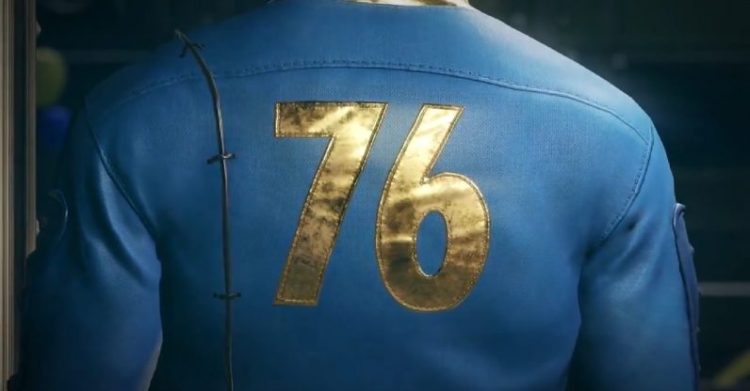
Fallout-76-4-796x416

The details, like punctuation, are vitally important. Its how you get unfortunate things like this when what you really meant was this albeit the lack of a comma may not be the most unfortunate thing about that.

At any rate!

This criticism may seem slightly ironic given that I am a chronic mis-user of punctuation and oft misser of details but at least I am a self admitted hypocrite. A missing detail here or there in the age of 24-Hour news can inadvertently snowball into an actual problem before you have the chance to correct it and will often live on long after it has been proven false. This is why we hammer on the reality that first impressions are so important, you want to make sure that the only interpretation of your product that people start with is the correct one. Whether you want it to or not the conversation that takes place after will evolve on its own but that first step is crucial as a guide.

After the initial announcement shenanigans that had everyone buzzing over what it would be and the ensuing teaser trailer the first bit of news that leaked about the game was that it was “Reportedly an Online Survival RPG”. This news of course was delivered by people speaking anonymously to game review sites which in the articles drew the immediate comparison to DayZ, Rust, Ark and other survival titles currently dominating the genre. The problem here is that those game titles come with a lot of baggage and for people who didn’t play the games a lot of it is instantly negative. From the reputations of toxic or unfun communities running the gamut all the way down to simply broken, incomplete cash grabs by devs who are poor stewards of their own IPs. While we can probably assume that a Fallout title by Bethesda will be toting at least a few pieces of this game design luggage based on previous games they’ve now inadvertently saddled themselves with some extra. In no small part because their multiplayer survival game comes years after the popularity of the genre hit its peak. They certainly aren’t dead or going away but Fallout 76 won’t have the benefit of riding a wave of hype based on the style of their game, only their developer reputation and brand name.

In the first installment of this I left you with a link to the NoClip documentary by Danny O’dwyer which I hope you watched, its worth it even as just a fan of games in general. I also mentioned that the documentary was largely responsible for my shift in attitude towards the potential for this game.

Lets jump into what really did it for me. From the outset the biggest hurdle to an enjoyable experience I felt was going to be griefing and I was pleasantly surprised to see that they addressed this in the documentary. Although left slightly baffled as to why this information wasn’t presented up front with the game announcement. For such a polished presentation that Todd Howard put on and acknowledging that he already knew why people would be wary of this direction they left out some key pieces of information.

At around 24:00 in the documentary Danny narrating mentions–

They have to do some work to make sure it’s not total chaos. Like giving wanted levels to aggressive players and having it so that the penalty for death is as light as making you respawn at a nearby location. 

Todd Howard elaborates on their approach a bit–

The other players are a system that we don’t control, in a great way. Let’s not shy away from it. Lets kind of solve it. Let them collide. And where there’s extra bad griefing or systems, we have a number of levers in place.

While he doesn’t say specifically what these “levers” are and I certainly can’t say that they are going to do any better than any other game dev untangling the rats nest that is multiplayer survival games this is still important to hear. That they have and are thinking ahead about the player experience and not assuming that they have it all correct from the get-go and the players will just figure it out.

But that for me is where a lot of the drama is. Like, let’s let them all collide. And it’ll be messy for a little bit, but we can solve it. I’d rather do that than like, play it safe. Boring.

Furthering his point I think we have to respect this attitude and acknowledgement that the challenges of this type of game system is not easy to get right and as of yet has not been “solved”. They know that going in and expect to have to adapt post release to problems as they come up. This is no guarantee for the quality of the game when it releases but for my money it makes the potential purchase easier knowing their mindset about undertaking this endeavor in the first place.

I’m okay with a game failing as long as the attempt for success was made in earnest. I bought and played games like The Division from release and quit when the problems became unbearable. When I came back a couple years after and tried it again I couldn’t help but applaud the work Ubisoft had done to get the game to a level they had wanted to deliver from day one. That effort alone will bring me back for the second, they earned that. I’ll happily give my money to any developer who stands by their mistakes as much as they do their successes.

You can sit in any design meeting and come up with a list of reasons not to do something. Its pretty easy. I’m worried about this and this and that. Well, I’m worried about it being boring.

I can’t help but agree here because in any creative endeavor, especially expensive ones like game development, anyone including fans can come up with lists of reasons to not do something. I’ve done it and I know every one of my gamer and non-gamer friends has done it, its natural and like Todd said, it’s easy. What’s hard is doing something in spite of that knowing the likely chance for failure. I don’t want to see any game fail, least of all my favorites, but I have a hard time begrudging them for trying to push themselves and their industry forward.

One of the other things revealed in the documentary was the matter of the in game map and what information was displayed on it. One of the developers reveals that an idea Todd had pushed for throughout was that every player, for good or ill, should be visible on the map at all times. I can see this as an interesting way to level the playing field when it comes to griefing as its sort of by default a loaded gun pointed at every player. You are free to engage in PVP but remember that everyone in that game instance knows who you are and where you are at all times. Going too far could result in making a lot of enemies very quickly. I can’t say for sure that no other multiplayer game does this but its certainly the first time I’ve seen it. I don’t feel like it’s a catch-all solution to potential problems but I’m curious to see how it affects the overall social dynamic.

In addition to this its mentioned that the team is also working on a Team Deathmatch game type which would also serve to give people who really want a challenging PVP experience a place to get that. Like Todd mentioned earlier it seems they’re prepared to offer numerous solutions to multiplayer problems instead of trying to find one to cover everything.

Last but not least one of the surprise announcements for the game was the inclusion of active nuclear missile silos that the players can take control of and even use to strike anywhere on the game map. Immediately this struck me as one of the worst design choices they could have made in a genre that already  encourages some of the worst behavior in multiplayer games. In the E3 presentation Todd didn’t elaborate much on how this would function only that there were lengthy and challenging quests to assemble the launch codes for these so it wouldn’t be a constant thing you’d have to deal with.

Even so just the prospect of having portions of the map turned into a nuclear firestorm even semi-regularly was an instant turn-off for me. Again the NoClip documentary provided some much needed clarification how exactly this was going to work. They explain first that one of the challenges they meant to tackle was the endgame and ensuring that high level players had enough difficult content to keep them busy and that some of it was repeatable.

Seems like Bethesda had something in common with my grandmother about keeping us out of trouble, idle hands and all that.

A good start but this still leaves the problem of players having control of actual nuclear missiles, if this isn’t a tool for just blowing up unsuspecting players and their bases then what was it? When the launch codes are finally assembled, a target chosen and the big red button pushed the explosion will irradiate an area changing the weather, flora and, fauna for a time making it much more dangerous and higher level. It’ll make gear or other rewards drop their a higher rarity, better crafting materials and legendary items not available anywhere else. Where you drop the nukes also matters because not every site will be the same so in order to reap the best benefits players will have to drop them in different areas to see what they get.

To me what this says is that Bethesda has made sure that while the nukes can be used to grief other players the real incentive is elsewhere. Why waste all that time jumping through hoops only to drop the nuke on some random player you don’t even know when you have yet to see what happens when you drop it on a little town in the middle of nowhere. If there is one thing gamers in a multiplayer setting like more than killing each other its grinding for loot. If the biggest weapon they have at their disposal is better used for finding the best loot than it is killing players you may have yourself something of a solution. Coupled with the fact that death is a minor inconvenience there is even further dis-incentive to waste your missiles on some hapless newbie than it is for your own material gain.

Like most of the things I’ve included here they are not perfect solutions and I doubt all of them will succeed but I am heartened by the fact that Todd Howard and Bethesda have never let player enjoyment out of their sight while exploring Fallout 76. Not enjoyment of just those folks who enjoy this genre of game but also longtime fans of their previous entries. There are a lot of unknowns yet about the game and how many of these mechanics will function but at this point I’m more than willing to be one of the first players to hop in a and try them out.

What I wish was that all of this information was available up front at or before the E3 presentation as I think it would have avoided many of the incorrect assumptions people had from the moment the news dropped about what kind of game this was. I’m sure in the time between E3 and the games launch this information will filter out to even the casual fans but missing out on that proper first impression is never good. My own interest as a Fallout fan from the very beginning of the series was nil until corrected by the NoClip video which should have never happened.

I do think now that given the proper context of their design choices and goals that I am looking forward to playing Fallout 76 but it could just as easily had gone the other way which means I can only assume it did for many others. They’re putting real effort into changing the stigma associated with these multiplayer games and I desperately hope they succeed.

I just feel more people would have been on-board from the start had we been given all the information.

Thanks for reading and I apologize for being gone so long but hopefully that’ll be different going forward. All we can do is try, right? I’ll be back soon with…. something else!

Until then happy gaming!

  • Non-Washable


Cliffy Bomb! Part 2

Hello again, folks!

Lets pick up where we left off with our friendly neighborhood game development rock-star, Cliffy B. Last time around we talked a bit about Cliff’s history in the industry and how he got to have the reputation he did prior to his pseudo-retirement and re-entry into the industry. This time I’d like to pick up with the venture following up the unfortunate failure that was Lawbreakers.

Around the time of Lawbreaker’s release there was some discussion about whether or not the demographic for that type of shooter even existed anymore or at least if it existed in sustainable numbers. In an attempt to perhaps be a little more in line with the current trends Boss Key decided to to release a new game…

Radical-Heights-Battle-Royale-release-date-943970

Radical Heights was released in an “Early Access” state which has essentially become the industry standard for, “Hey gamers, we need some money so here is something we’re working on that you can play early if you pony up some dough.”. As you can see I’m probably a little jaded when it comes to this style of pre-sale but for context I will say that I have purchased, played and, very much enjoyed games in early access. Off the top of my head I can’t think of any which have ended up incomplete or abandoned so I’ve been lucky but there are numerous early access horror stories which offer important counter examples. Watching this trailer it’s easy to see why the game is in early access as the character models look like lower res versions of OG Borderlands and the guns remind me of glossier versions of Counter Strike 1.6. At the very least the bikes look roughly equivalent to GTA… Vice City.

If you’ve lived under an active volcano for the last year or more you may have missed the rapid and somewhat stunning rise of Battle Royal games like PlayerUnknown’s Battlegrounds and Fortnite which probably deserve posts of their own. Their absolutely insane amount of success has caught pretty much the entire industry off-guard so naturally they are playing catch up. Treyarch announced that their next Black Ops game will completely eschew their single player in favor of this new trend. This type of trend chasing isn’t really surprising as anyone with a little spare cash and a board will try to ride the wave while its high. What tends to be the worst outcome is when companies and developers gut existing popular franchises in an effort to shove their player-bases onto the bandwagon.

Radical Heights was a similar effort to this although I’m sure Cliff and Boss Key were pushed into that position by the failure of Lawbreakers, making it was their last effort to keep the company afloat. Unfortunately such a hasty attempt to slap together something to ride the Battle Royale wave, which has already been cruising for the better part of a year, it would be too little, too late. In a genre which is going to quickly become over saturated the biggest requirement is to have something significantly mechanical or aesthetic to set you apart. So how do these three competitors set themselves apart?

PlayerUnknown’s Battleground

  • Character customization.
  • Realistic Weapons, Gear and Level Design.
  • Vehicles.
  • Battle Area That Constricts Over Time
  • Lootboxes
  • Price $29.99

Fortnite

  • Character Customization.
  • Fun Cartoonish Aesthetic.
  • Structure Building & Destruction.
  • Vehicles (In Other Game Modes. Battle Royale Has a Hoverboard.).
  • Large Play Area.
  • Content Development is Very Fast.
  • Interesting Media Crossovers.
  • Lootboxes.
  • Co-Op Game Mode.
  • Cost
    • Battle Royale: Free
    • Standard Edition: $39.99
    • Deluxe Edition: $59.99

Radical Heights

  • Early Access/Free to Play.
  • 80s Gameshow Aesthetic.
  • Dynamic “Game Show Moments”. (I’ve done my best to figure out what these are, I honestly can’t tell you besides knowing that sometimes you can spin a wheel for random prizes or effects.)
  • Bikes With Pegs So You Can Have a Second Rider.
  • No Confirmation of Lootboxes. (Probable If It Ever Exits Early Access).
  • Cost
    • Free to Play.
    • Founders Packs.

I wont deny that Radical Heights the idea certainly had potential but being rushed out the door so soon undercut its ability to garner any sort of long-term support that they desperately needed. I can’t comment factually on the financial state of the company or their ability to possibly secure outside funding in order to continue operations. I have to imagine that based on the name heading the studio and the success of Battle Royale games that it wouldn’t have been completely out of the question. The unfortunate reality of Radical Heights development is also echoed by Cliffy himself in a post on Twitter which I will give him credit for being that open and honest with the community.

All of this finally brings us to what I find most disappointing about this entire ordeal, beyond Cliffy’s general attitude through these releases, the marketing, the poor execution and ultimately the closure of the studio.

The ideas that really, truly could have been his next billion dollar franchises. After the announcement of Boss Key’s closure Cliffy took to Twitter and began posting artwork for game ideas that may have been in the studios future.

Donuts

https://twitter.com/therealcliffyb/status/996481671892537344

Rover/DogWalkers

https://twitter.com/therealcliffyb/status/996480660863967232

And finally, DragonFlies

https://twitter.com/therealcliffyb/status/996478270282653697

If there is a universal truth in entertainment mediums it’s that new IP’s are incredibly difficult and risky to introduce due to them being large investments just to get off the ground. It’s hard to fault developers for not wanting to take on longshot ideas as their first outings before establishing a solid financial base but Cliff and his studio were in a unique spot. He had the resources to put together a studio with talent capable of turning out a Triple A quality game and possible a second within four years. Far more than what most can do at the outset.

So what was the product of their first four years as a studio?

One game in a genre that hasn’t seen widespread popularity in almost a decade and an attempt to catch a fad with two titanic entries already completely dominating the scene.

All the while in the bullpen sat new ideas that may have actually had the potential to make a splash in the industry and established Boss Key as the new developer to watch. That might fly in the face of what I said above about new IPs being risky, which is true, and while hindsight is 20/20 the reality still remains that their shot at a “Sure thing” was still wide by a mile. Taking on Fortnite and PUBG may be difficult but no moreso than trying to revive a niche community into the mainstream and in many ways I think it would have been much easier. The myriad criticisms of both games are fresh and ripe to be taken advantage of by a new motivated studio looking to establish themselves, especially considering the crop of streamers who would be looking to get in on the ground floor of a promising new entry.

It’s impossible to say whether or not any of the shelved ideas would have truly been Cliff’s next billion dollar IP, but if the choice is between chasing a year plus old trend or trying to revive a dead one, why not shoot for the stars and bring something new?

Washed up “dudebro” game developer OR legendary creative genius…depends on who you ask. – Cliff Bleszinski’s Twitter Profile

Based on this latest outing I hate to say that the answer, at least for now, seems pretty clear.

  • Non-Washable

My Way Or The Highway

The secret we should never let the gamemasters know is that they don’t need any rules.

This quote is most commonly attributed to Gary Gygax, the creator of Dungeons & Dragons, and whether or not he did actually utter those specific words the truth of them definitely was reflected in how he spoke about the game. Gary was rather vocal about his desire for people to not be weighed down by the rules but instead inspired by them to take the game in new and exciting directions. The community at large has certainly embraced that tradition and used D&D as a stepping stone to create their own fantastical worlds, classes, races, items, quests and much, much more.

In a system that relies so heavily on the imagination of a group of people in order to function the rules would seem, at best, a secondary concern. Although if we all think back to our childhood for a moment and remember that one kid, you know the one, who when playing pretend was always the best at everything and vulnerable to nothing? That’s why D&D has rules. The rules act as a scaffolding over which you can drape an infinite number of epic adventures for your players to traipse around in. Above all of that this basic framework allows players and DMs to modify the game and expand on its core content without the need for a lot of concern of unbalancing it. It can always happen certainly but there are plenty of tips and guides provided to help you bring your vision to life.

So why all this talk of the rules and structure of D&D? Well like my other posts I was spending some of my free time browsing through advice threads and came upon one where a player asked if they were being unreasonable disagreeing with some houserules a DM set out. I’ll put the list of modified rules below and then we’ll discuss some of them and why they might exist and what it could say about playing at that table.

  • Fumbles possible with every attack. Cannot Lucky out of fumbles.
  • No Initiative Rolls, everyone gets a flat 10 + DEX (Or WIS, Houserule) Mod. I brought up a Human Variant Assassin with Alert getting a free SA every encounter, and was told to stop trying to break the system.
  • Multi-Attackers only have to hit once. After that, all attacks afterward are guaranteed hits.
  • Roll for stats. If you don’t like what you get do a 27 point buy.
  • Most likely will run into a CR4 Monster with 4 level 1s.
  • DM has a list of Banned Spells for Wizards. It’s not a short list.
Now over the years I’ve certainly seen some far more restrictive table rule lists than this one and I certainly try to never tell a DM that their particular rules don’t work or shouldn’t be used. It’s their table and they should run it how they see fit. I’ve pointed out in threads of the past that the result of this is really that you limit your player pool to people who agree with your style. There isn’t anything wrong with that unless you complain that no one wants to play under your specific set of rules modifications which is the prerogative of players.
 

So, if I’m loathe to tell DMs that their ideas are flat out wrong and that everyone has the freedom to choose where, when and how they play then what is the point of writing this post? Excellent question. If I’m perfectly honest with you it’s because I was working on something else that I couldn’t get out of my brain coherently so this was my backup. That being said I still think this is something worth talking about and I would have written it up sooner or later.

As DMs we deal with a lot of headaches some of which are a result of rules conflicts, unclear rules or different interpretations of rules which will often be seen in RAW (Rules as Written) vs RAI (Rules as Intended) arguments. Speaking of which I have a good one for that coming up soon-ish. Some veteran DMs know of these pitfalls and will lay down rules in their campaign pitch documents or during a Session 0 so players know going in how specific things work in their setting. Sometimes DMs will get caught off guard and will need to make an on the spot ruling during a game which will dictate how things work for the rest of the campaign for consistency. In that situation you can always make a temporary ruling and then come back later with a better researched opinion if you care to but ultimately your word is law.

So, onto the list –

First off we have fumbles, now full disclosure I actually like causing characters to fumble their weapons or items as it almost always gets a pretty hearty laugh from the table and everyone has a good time. This is very table dependent and I usually avoid doing it in very tense moments where any little thing can swing the outcome of a major engagement. Another problem with this fumble rule that I see is that if you fumble on a roll of natural 1 that means you’re doing it roughly 5% of the time that you’re in combat. A DM I’ve gotten to know over the past month had a great way of putting it when he said, “Think about how insane it would be if you got into car accidents 5% of the total time you spend driving.” Proficiently wielding and using a weapon in the a D&D world is a matter of life and death, adventurers even moreso as their life centers around seeking out danger in any place it can potentially be found, along with the profit from facing it. Very few adventurers would ever survive if they lost their weapon 5% of the time they spend in combat, this is exacerbated even further when you consider characters who attack multiple times a turn. Outside of the mechanics of it, while it can be occasionally funny, it feels bad as a player to have one or more turns eaten up by a single bad roll. As DMs we really do strive to keep those “feel bad” moments to a bare minimum because as Gary reminds us, fun is the ultimate goal here.

I’ll circle back around to the initiative thing during the wrap up as I think it illustrates something about the overall list.

Much like the decision on initiative I think this one sort of speaks to the attitude leading to the changes however this one has some additional balancing issues that I can see. For one PCs are not the only people in the game who get multiple attacks and creatures with multiattack or legendary actions could become serious party threats in short order with just one or two decent rolls. I’m not sure the time saved on rolling warrants the extra danger, especially if you aren’t explicitly running a high danger campaign. The danger certainly goes both ways but over the life of a campaign the characters will be attacked far more often than they will spend attacking, skyrocketing the chance of this turning out badly.

The next two I don’t have particular problems with as I find giving players alternatives for fixing completely jacked up stat rolls is just a simple feel good thing you can do. Characters with an amusingly low dump stat can certainly be fun to play but if you’re going in hoping to play a high fantasy hero then it can be a serious bummer if you catch a run of terrible rolls.

A CR4 monster depending on the choice for four level 1 characters is difficult but doable. A good early challenge to really give the PCs a triumphant moment I think speaks to the core of combat in D&D, if all combat is little more than rolling over goblins and orcs it can get stale fast. CR4 ratings also include one of my absolute favorite early enemies, the Flameskull. If used properly that little floating lantern of fiery death will haunt their dreams until they finally manage to kill it for good.

Last on the list was the one that really caught my attention as removal of abilities and spells is something that shouldn’t be done lightly, especially if it isn’t being replaced by anything. Its definitely understandable to limit the use of game breaking combinations but as of right now I don’t think there are any that stand out in 5th edition D&D. Also the user in question notes that it’s “Not a short list” either which I would find concerning as a player looking into playing a Wizard at that table. Without a concrete list of what spells were removed its hard to know exactly what this particular DM saw or experienced in past games to lead him to make this decision. Even without that list however I think it warrants a little exploration.

As I mentioned above part of being a DM means running your table in a fashion that makes sense to you and allows you and your players to have fun. Houseruling aspects of the game that you feel adversely affect the overall experience or don’t allow you to run the game you want are well within a DMs right to change. However removing things like abilities or spells risks unbalancing or outright crippling classes that rely on them as part of their core identity. If the issue stems from how a spell is written or how it interacts in the game then communication with the affected player is a much better starting point where a potential compromise could be reached prior to deciding on outright removal.

From my own personal experiences I have been considering ways to re-imagine spells like Detect Magic and Identify because I feel like they remove certain avenues of exploration from the game with far too much ease so I understand the impulse.

Ultimately what this list strikes me as is an attempt to streamline sometimes time consuming aspects of the game for convenience and not necessarily balance or mechanical clarity. There are certainly benefits to be had by taking steps to ensure that the game runs smoothly and efficiently but enforcing mechanical changes as a way to get that seems punitive and somewhat lazy. On a recent GM discussion I got to partake in a guest, Taran, suggested during combat using an “On deck” notice to let players know when their turn is coming up so they’re reading to go when its time. Simple reminders and things like sleeved info cards that are easily accessible for complicated spellcasting classes can solve many efficiency issues. Players getting to know their classes and things they will have to do every round like multi-attacks, concentration checks or anything else come with time and DMs need to be cognizant of that need going in. The purpose going in with modifications like this may be well intentioned but must be approached with the proper amount of care and consideration on how it may affect the table as a whole and not just on your experience as a DM.

All of this is not an argument against experimenting with different ways to run your games in an attempt to improve the experience for everyone but that like any interdependent ecosystem changes must made mindfully and unselfishly.

What changes have you made or do you wish to make to your game to improve it? Are you working on any houserules that you hope to use as a standard template for the future? I’d love to hear them!

Until next time, happy rolling!

– Non-Washable