Part 2: Paradise Is In The Details

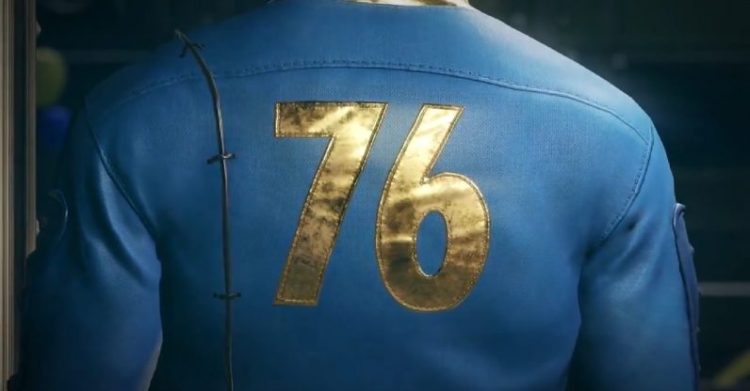
Fallout-76-4-796x416

The details, like punctuation, are vitally important. Its how you get unfortunate things like this when what you really meant was this albeit the lack of a comma may not be the most unfortunate thing about that.

At any rate!

This criticism may seem slightly ironic given that I am a chronic mis-user of punctuation and oft misser of details but at least I am a self admitted hypocrite. A missing detail here or there in the age of 24-Hour news can inadvertently snowball into an actual problem before you have the chance to correct it and will often live on long after it has been proven false. This is why we hammer on the reality that first impressions are so important, you want to make sure that the only interpretation of your product that people start with is the correct one. Whether you want it to or not the conversation that takes place after will evolve on its own but that first step is crucial as a guide.

After the initial announcement shenanigans that had everyone buzzing over what it would be and the ensuing teaser trailer the first bit of news that leaked about the game was that it was “Reportedly an Online Survival RPG”. This news of course was delivered by people speaking anonymously to game review sites which in the articles drew the immediate comparison to DayZ, Rust, Ark and other survival titles currently dominating the genre. The problem here is that those game titles come with a lot of baggage and for people who didn’t play the games a lot of it is instantly negative. From the reputations of toxic or unfun communities running the gamut all the way down to simply broken, incomplete cash grabs by devs who are poor stewards of their own IPs. While we can probably assume that a Fallout title by Bethesda will be toting at least a few pieces of this game design luggage based on previous games they’ve now inadvertently saddled themselves with some extra. In no small part because their multiplayer survival game comes years after the popularity of the genre hit its peak. They certainly aren’t dead or going away but Fallout 76 won’t have the benefit of riding a wave of hype based on the style of their game, only their developer reputation and brand name.

In the first installment of this I left you with a link to the NoClip documentary by Danny O’dwyer which I hope you watched, its worth it even as just a fan of games in general. I also mentioned that the documentary was largely responsible for my shift in attitude towards the potential for this game.

Lets jump into what really did it for me. From the outset the biggest hurdle to an enjoyable experience I felt was going to be griefing and I was pleasantly surprised to see that they addressed this in the documentary. Although left slightly baffled as to why this information wasn’t presented up front with the game announcement. For such a polished presentation that Todd Howard put on and acknowledging that he already knew why people would be wary of this direction they left out some key pieces of information.

At around 24:00 in the documentary Danny narrating mentions–

They have to do some work to make sure it’s not total chaos. Like giving wanted levels to aggressive players and having it so that the penalty for death is as light as making you respawn at a nearby location. 

Todd Howard elaborates on their approach a bit–

The other players are a system that we don’t control, in a great way. Let’s not shy away from it. Lets kind of solve it. Let them collide. And where there’s extra bad griefing or systems, we have a number of levers in place.

While he doesn’t say specifically what these “levers” are and I certainly can’t say that they are going to do any better than any other game dev untangling the rats nest that is multiplayer survival games this is still important to hear. That they have and are thinking ahead about the player experience and not assuming that they have it all correct from the get-go and the players will just figure it out.

But that for me is where a lot of the drama is. Like, let’s let them all collide. And it’ll be messy for a little bit, but we can solve it. I’d rather do that than like, play it safe. Boring.

Furthering his point I think we have to respect this attitude and acknowledgement that the challenges of this type of game system is not easy to get right and as of yet has not been “solved”. They know that going in and expect to have to adapt post release to problems as they come up. This is no guarantee for the quality of the game when it releases but for my money it makes the potential purchase easier knowing their mindset about undertaking this endeavor in the first place.

I’m okay with a game failing as long as the attempt for success was made in earnest. I bought and played games like The Division from release and quit when the problems became unbearable. When I came back a couple years after and tried it again I couldn’t help but applaud the work Ubisoft had done to get the game to a level they had wanted to deliver from day one. That effort alone will bring me back for the second, they earned that. I’ll happily give my money to any developer who stands by their mistakes as much as they do their successes.

You can sit in any design meeting and come up with a list of reasons not to do something. Its pretty easy. I’m worried about this and this and that. Well, I’m worried about it being boring.

I can’t help but agree here because in any creative endeavor, especially expensive ones like game development, anyone including fans can come up with lists of reasons to not do something. I’ve done it and I know every one of my gamer and non-gamer friends has done it, its natural and like Todd said, it’s easy. What’s hard is doing something in spite of that knowing the likely chance for failure. I don’t want to see any game fail, least of all my favorites, but I have a hard time begrudging them for trying to push themselves and their industry forward.

One of the other things revealed in the documentary was the matter of the in game map and what information was displayed on it. One of the developers reveals that an idea Todd had pushed for throughout was that every player, for good or ill, should be visible on the map at all times. I can see this as an interesting way to level the playing field when it comes to griefing as its sort of by default a loaded gun pointed at every player. You are free to engage in PVP but remember that everyone in that game instance knows who you are and where you are at all times. Going too far could result in making a lot of enemies very quickly. I can’t say for sure that no other multiplayer game does this but its certainly the first time I’ve seen it. I don’t feel like it’s a catch-all solution to potential problems but I’m curious to see how it affects the overall social dynamic.

In addition to this its mentioned that the team is also working on a Team Deathmatch game type which would also serve to give people who really want a challenging PVP experience a place to get that. Like Todd mentioned earlier it seems they’re prepared to offer numerous solutions to multiplayer problems instead of trying to find one to cover everything.

Last but not least one of the surprise announcements for the game was the inclusion of active nuclear missile silos that the players can take control of and even use to strike anywhere on the game map. Immediately this struck me as one of the worst design choices they could have made in a genre that already  encourages some of the worst behavior in multiplayer games. In the E3 presentation Todd didn’t elaborate much on how this would function only that there were lengthy and challenging quests to assemble the launch codes for these so it wouldn’t be a constant thing you’d have to deal with.

Even so just the prospect of having portions of the map turned into a nuclear firestorm even semi-regularly was an instant turn-off for me. Again the NoClip documentary provided some much needed clarification how exactly this was going to work. They explain first that one of the challenges they meant to tackle was the endgame and ensuring that high level players had enough difficult content to keep them busy and that some of it was repeatable.

Seems like Bethesda had something in common with my grandmother about keeping us out of trouble, idle hands and all that.

A good start but this still leaves the problem of players having control of actual nuclear missiles, if this isn’t a tool for just blowing up unsuspecting players and their bases then what was it? When the launch codes are finally assembled, a target chosen and the big red button pushed the explosion will irradiate an area changing the weather, flora and, fauna for a time making it much more dangerous and higher level. It’ll make gear or other rewards drop their a higher rarity, better crafting materials and legendary items not available anywhere else. Where you drop the nukes also matters because not every site will be the same so in order to reap the best benefits players will have to drop them in different areas to see what they get.

To me what this says is that Bethesda has made sure that while the nukes can be used to grief other players the real incentive is elsewhere. Why waste all that time jumping through hoops only to drop the nuke on some random player you don’t even know when you have yet to see what happens when you drop it on a little town in the middle of nowhere. If there is one thing gamers in a multiplayer setting like more than killing each other its grinding for loot. If the biggest weapon they have at their disposal is better used for finding the best loot than it is killing players you may have yourself something of a solution. Coupled with the fact that death is a minor inconvenience there is even further dis-incentive to waste your missiles on some hapless newbie than it is for your own material gain.

Like most of the things I’ve included here they are not perfect solutions and I doubt all of them will succeed but I am heartened by the fact that Todd Howard and Bethesda have never let player enjoyment out of their sight while exploring Fallout 76. Not enjoyment of just those folks who enjoy this genre of game but also longtime fans of their previous entries. There are a lot of unknowns yet about the game and how many of these mechanics will function but at this point I’m more than willing to be one of the first players to hop in a and try them out.

What I wish was that all of this information was available up front at or before the E3 presentation as I think it would have avoided many of the incorrect assumptions people had from the moment the news dropped about what kind of game this was. I’m sure in the time between E3 and the games launch this information will filter out to even the casual fans but missing out on that proper first impression is never good. My own interest as a Fallout fan from the very beginning of the series was nil until corrected by the NoClip video which should have never happened.

I do think now that given the proper context of their design choices and goals that I am looking forward to playing Fallout 76 but it could just as easily had gone the other way which means I can only assume it did for many others. They’re putting real effort into changing the stigma associated with these multiplayer games and I desperately hope they succeed.

I just feel more people would have been on-board from the start had we been given all the information.

Thanks for reading and I apologize for being gone so long but hopefully that’ll be different going forward. All we can do is try, right? I’ll be back soon with…. something else!

Until then happy gaming!

  • Non-Washable


Part 1: Living In A Griefer’s Paradise

Whelp it’s E3 2018 which means that the hour has officially hit Hot-Take O’Clock.

What’s that you ask? If you don’t know already then you’ll be happier in the long run. Suffice it to say its a time of year when opinionated people everywhere like to crawl out of the woodwork to get some fresh air including yours truly.

fallout-76-header-2

This past weekend I wanted to use my raw crisp oxygen to spew back out some opinions about Bethesda and the announcement of their newest game, Fallout 76. I had quite a few strong feelings about their chosen direction of MMO-Lite and forcing their once beautifully narrative driven series into unknown, potentially toxic, territory that all the Rad-Away in the universe couldn’t fix. I know plenty of people who are vehemently against the current shift away from single player experiences and while I understand the criticism I still cant bring myself to condemn it fully. As much as I crave deep and meaningful single player games I can’t deny that some of my favorite memories have happened online with total strangers, some of who became lifelong friends. Whats more is that in a well designed game with a good community the emergent experiences are something you will very rarely, if ever, see in a tightly controlled single player title. That being said its also important to remember that some of my worst gaming experiences have also come in these multiplayer spaces, not all of them certainly but some. Largely just a different flavor from the worst single player ones.

We could spend all day debating the overall merits of multiplayer versus single player but what I’d like to focus on is something more specific in light of Fallout 76: Griefing.

Griefing is something that has progressively become more and more a part of our online experiences and in some communities is seemingly so ubiquitous that people actively avoid getting into the games for fear of it. Often the reality isn’t quite as bad as all that but by word of mouth games and their communities can build reputations that actively discourage participation and growth. The jokes about “12yr Old CoD Kids” who will “Fuk ur mum” have been around so long that I think they’ve reached a form of gaming antiquity. The unfortunate reality behind it however is still alive and well in the gaming community itself although it has mutated a bit since the days when a simple mute was the best solution. If you’re curious for some examples that happen in MMOs like World of Warcraft you can peruse here. You’ll also notice that some forms of griefing that are listed there like Corpse Camping and Ganking aren’t even against Blizzard’s ToS on servers listed as PvP, they’re just a part of life in that environment.

I want to make it very clear here that I am not against this as a consequence of PvP centered gameplay because it is a reality of that game type. In the same way that we don’t play certain game genres because they don’t appeal to us the same consideration must be given when looking at PvE, PvP and, Co-Op style games. In addition there are certain kinds of griefing that are unintended by the developers, much like in the early days of The Division where because of collision physics people could block quest NPCs, data terminals and even doors. This resulted in players intentionally going idle while blocking doors not allowing people out or in early quest areas, halting progress for new players. For me personally that is the type of griefing that will make me want to snap my controller in half, the kind that is not in the spirit of the game but instead is all about someone else purposefully trying to waste my time and ironically, their own. This is made infinitely worse when this behavior is supported by lazy or outright poor design. I’m sure we all have particular flavors of griefing that bother us more than others but on the level none of it is particularly fun no matter what side you’re on.

In the context of Fallout 76 and it’s announcement I found myself marveling at how Todd Howard and Bethesda had seemingly built a game with new and exciting ways to potentially ruin their players experiences.

No, really.

I know it sounds like hyperbole but they decided to give players the ability to gain access to and then use nuclear missile silos so they can devastate large parts of the map. Admittedly Howard goes on to qualify this with the fact that it will be difficult to get the launch codes in order to do this so it wont be like the entire map will be engulfed in a constant nuclear firestorm, but still. These are the same gamers who back in 2005 purposefully spread a virtual plague devastating the populations of World of Warcraft servers across the globe. Which incidentally is one of my favorite memories of that game and not just because years later the CDC and epidemiologists used that debacle to study pandemic behavior. Gamers are industrious in that way that they will find any and every way to pervert game systems for their own entertainment. They’ll peruse every pixel or paw their way through thousands of lines of code just to find new and inventive ways to break things. In some cases for no other reason than to ruin other players fun.

If game testers are masochists then these gamers are the sadists of our various communities.

I will give Bethesda credit for trying something new and exploring the concept of multiplayer that the community has been asking for as far back as Fallout 3, albeit they wanted Co-Op. But whose counting? The decision has been made and with the games fairly imminent release we’re left dealing with this reality. During the presentation I alternated pretty consistently between actual excitement and disappointment as the game was described in detail for the first time.

The setting, timeline and lore for this game starting with the earliest vaults to open after the devastation? I’m there. That is the bread and butter of these games as well as Bethesda as a publisher and it is what keeps me coming back over the years in-spite of buggy or broken games. The Fallout franchise has always been bursting with a style and flavor all its own even in a genre like Post-Apocalyptic games that can be at times, over-saturated.

New monster types including a huge irradiated sloth? Hell. Yes. Like a friend said while we were watching the conference, “I was afraid we were in for more Rad Scorpions.”. I couldn’t agree more, of all the mechanical or visual overhauls these games needed one of the things I’m most excited for is different enemies to fight to go with the change of scenery.

Then it starts to get shaky when Howard reveals to us that, “Fallout 76 is entirely online.” to which he gets the lukewarm reaction he was clearly expecting from the audience given that he follows up with, “I know, you have like a thousand questions and I’m going to go through them in order.” as he looks down at his watch. His speech is only thirteen minutes old. This is my first moment of real disappointment,

“First, of course you can play this solo.”

A lie, a lie that is repeated so often that I think as gamers we just don’t even register it anymore, it washes over us like a fart in an elevator we can’t escape from. I should be fair and point out that it isn’t a lie lie but more a lie based on a technicality. You can play these MMO-Lite games solo but only if you don’t want to actually experience the entirety of the game because there will be content that you cannot do solo. Whats more is that even if the content can be done solo it may take so long or be so complicated that you are likely to have other free roaming players stumble upon you while you’re in the process of doing something and kill you. Or at the very least interrupt your experience in some meaningful way that you have little say in. As we discussed above its a consequence of the game we have chosen to play and we know that going in but only if the developers are honest with their audiences. This aspect of PvP will not be optional in Fallout 76 at release which may be a tough pill to swallow for longtime fans.

Howard goes on to make a compelling statement that they at Bethesda love all of the single player aspects of their games and the stories that come out of that but they, like us, have always wondered how their games would be in a multiplayer setting. For my money though it is unfortunate that they decided to jump straight to the complicated world of PvP Survival Multiplayer instead of taking the slightly smaller step of an optional co-op campaign to warm up their playerbase to the idea of something more.

He does state in his presentation that death will not result in the loss of any of your stuff which means that even in a semi-hardcore survival game the punishment of death is ultimately nothing. It is there as an annoyance, a time sink but with no real threat to anything but your productivity, patience and, sanity. For some this will be a point in the games favor but for others this will be a knock against it for a combination of reasons including a lack of danger in a survival setting and meaning virtually no punishment for griefers. Even if someone harassing you in a game like this never actually manages to kill you the constant interruption of your gameplay still adds up and is a frustration all its own.

So where does all this leave me regarding this newest Fallout game? Not great to be honest as the core experience this game is built on sours the delicious candy coating we got a taste of prior to the conference.

That was, until I watched this.

Thank you for reading! Enjoy the the incredible work of Danny O’Dwyer’s NoClip Studio and I’ll be back to talk about insights from the documentary and where I think Bethesda went a bit wrong in their messaging to gamers.

Until then, happy gaming! And a Merry E3!

  • Non-Washable

Let’s Make a Deal!

Today I got a chance to catch up on the Stream of Many Eyes over on the D&D Twitch channel where you can find the VODs. There was a game run at the end called Jocks Machina with a cool lineup of some generally unorthodox players that I highly recommend you check out. If you’re not too worried about spoilers then head over to this video and fast forward to 9:34:20 to watch what I think is an important exchange between Mike Mearls and a man more commonly known as The Big Show.

They’re in the process of fighting some Death Knights and Big Show has gone in for the kill on one of them, unfortunately after three attacks he falls just a bit short which is understandably frustrating. For some these situations can be resolved using the “Rule of Cool” which essentially states that as long as something is sufficiently cool while at the same time bending or breaking some rules, let it slide. You can think of it like the Michael Bay School of Dungeon Mastering, it might not make much sense in hindsight but in the moment it’ll blow you away. Its a solid bit of reasoning because as we’ve discussed before your players are the heroes and we strive to make them feel like it even at the expense of some technicalities.


In this case we have a situation where the rigid structure guiding combat in the game leaves it feeling stilted and unnatural. As it stands now Mearls has told Big Show that the attacks with his maul have staggered his opponent, for flavor, but ending the turn there feels bad when this seems like an opportunity to press your opponent for the kill. The rules dictate that his actions are spent so his turn simply ends. As it was pointed out in the game he could use his Action Surge but using an additional three attacks to finish off a nearly dead enemy doesn’t feel like a particularly good use of it as a resource. Especially in an already somewhat tough fight.

As a quick aside one of the things the designers of D&D changed from 4e to 5e was the action economy because in 4th edition they realized a common complaint from players was never having a reason to use their minor actions. Some classes could make use of them but not all and it feels bad to leave something unused in a turn, you want to feel like you’re using every avenue available to you in order to be effective. So in 5e they sought out more ways for players to use their bonus action so that more often than not players felt like they were using their whole turn, every turn for something substantive.

Looking at the pending anti-climactic end to Big Show’s turn Mearls’ reaches into the DM bag of tricks and exercises his freedom to make a little deal. He offers him a gamble, a simple roll of the dice, to see if he can finish off his target with the caveat that he’ll suffer disadvantage on saving throws for the next round.

Risk vs Reward.

When we talk about protecting player agency and putting the game in their hands this is exactly the type of thing that we’re talking about albeit possibly a lesser used example. In a moment where Big Show was facing having a triumph taken away from by the mechanics and action economy of D&D Mearls put the choice back in his players hands. Protecting their agency doesn’t mean just handing them wins or ensuring things go their way but rather giving them the opportunity to decide for themselves. Big Show takes a moment to consider it and, probably wisely, decides to back off and take cover instead of pressing his advantage. Whether or not he took Mearls up on the offer is entirely beside the point, the idea is that the decision was no longer being made by the game or the DM but by the player. Like I mentioned above with the change to Minor/Bonus actions its removing the mechanical limitation and instead allowing the players to choose whether or not they use it each turn. As soon as Big Show decides for himself to withdraw you can see instantly that his attitude changes and the round continues. Such a small thing can go a long way.

Some discussion could be had over how doing something like this may open the door to players expecting or even arguing for these little extras more often, which is fair. Much like handing down decisions as a judge the DM can set unhealthy precedence at their table by simply trying to be permissive. If you institute something like this its important to use it evenly among your players and not look like you’re favoring some more than others.  Even more important is to probably discuss the prospect with your players prior to implementing it and see if its even something they’d be interested in.

A while back I remember Mike Krahulik of Penny Arcade talked about a rule he instituted in his D&D game when you missed a roll by one, which aside from rolling a natural one, is probably the worst way to fail. When a player missed a check or roll by one he gave them the opportunity to state a case for their success. If they could explain in some compelling fashion why or what they would do in order to overcome that one digit deficit he would give it to them. The reward for this was two-fold as the players got to  succeed on a hairs breadth miss and it also encouraged more creative thinking on their part to justify it.

Maintaining the flow of combat can be tricky especially in a group of newer players who may take a little extra time for their turns. In addition to the things discussed above the other way to help maintain it without adjusting or adding mechanics is to try and ensure a narrative continuity. Like the hiccup in Big Show’s turn where an excellent series of strikes concluded with stopping awkwardly with the kill just out of reach instead try to ensure it stops at a place that makes sense. A fluid choreography of sorts that also encourages and assists the players with narrating their own actions instead of just mechanically stating what skills they would like to use from turn to turn.

It turns –

“The Bandit Captain strikes at you three times rolling a—”

“14.”

Miss.”

“19.”

Hit.”

“16.”

Miss.”

“He hits you for a total of 6 slashing damage. Alright Jen, you’re up.”

Into –

“The Bandit Captain lunges point first at you with his scimitar for… 14.”

Miss!”

“You sidestep the lunge and pivot for the next strike as the Captain turns the edge of the blade towards you, draws back and strikes at your stomach for… 19. Jen you’re up next.”

Hit.”

“You try to parry the follow up but the blade sneaks under your armor, opening a gash in your side for 6 slashing damage. On the follow through he draws the scimitar back one final time and attempts to plunge it into your stomach for… 16.”

Miss!

“You use your longsword to parry the desperate overextended thrust down into the dirt at your feet, leaving him open.”

I’ve also found that using this style of combat description also helps prompt players into trying different things outside of straight attacking and defending. Like I know for instance that if I presented one of my players with that scenario the first thing they would do on their next turn is try to disarm the captain by stomping on the blade and then pressing their attack. This raises the level of overall player engagement, strategy and use of the environment during combat with little more than some extra description. It gives them something to play against  instead of what may as well be a straw filled training dummy for them to abuse.

As a DM don’t be afraid to wheel and deal a little with your players if they’re just short of that truly triumphant moment. Give them the chance to take the risk if they want, to push their boundaries and be the hero.

Until next time, happy rolling!

  • Non-Washable